



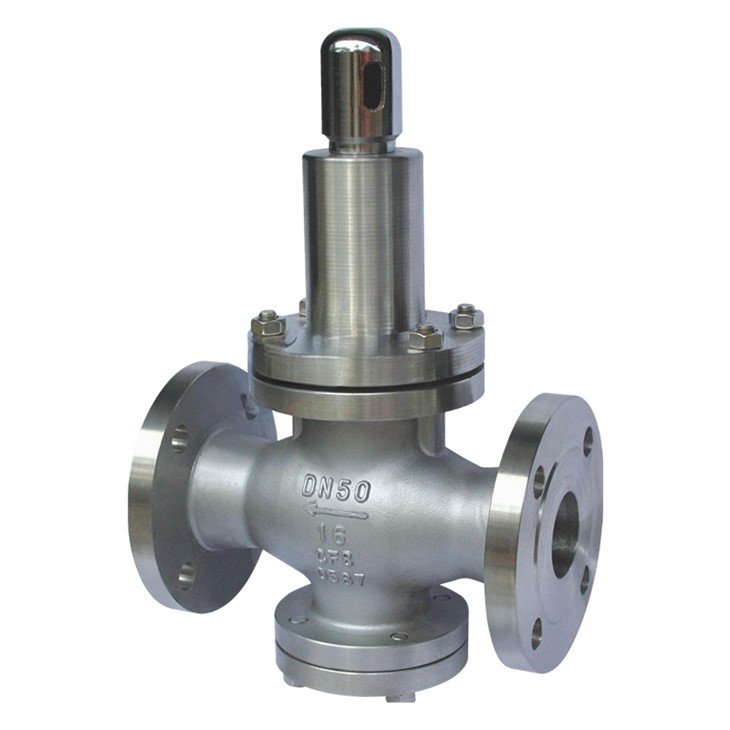
Product Introduction
Marine Pressure Reduction Valve is a pressure reducing device installed in the ship's piping system to adjust the higher medium pressure at the input end to a stable and controllable lower output pressure.
Product Details
|
Name |
Pressure reduction valve |
|
Category |
Marine valve |
|
Brand |
Meet all brands |
|
Specification |
5k/10k/16k/20k/30k |
|
Material |
Cast iron/cast steel/bronze/stainless |
|
Place of original |
High quality equivalent parts |
|
Packing |
Standard packing |
|
Condition |
Brand new |
|
Terms of delivery |
Exw |
|
Price |
To be negotiated |
|
Ports |
China ports and other ports in the world |
Advantages
Multi-level pressure rating design
The Marine Pressure Reduction Valve provides multiple pressure ratings from 5K to 30K, which can cover the requirements of various working conditions such as cooling water, steam, compressed air, etc. in common ship systems.
Multiple material configurations
The pressure reducing valve supports four metal materials: cast iron, cast steel, bronze and stainless steel. Stainless steel is suitable for highly corrosive environments such as seawater or acidic gas, cast steel is suitable for high-pressure steam systems, and bronze has good electrochemical stability in seawater-freshwater switching systems.
Compact structure
The Marine Pressure Reduction Valve adopts a precision casting integrated structure. The compact internal flow channel design can maintain high flow capacity while reducing volume, which is suitable for installation in small cabins of ships.
Delivery And Shipping Service

24*7 hours online, our services cover all main ports in the world, we can provide the cost and time saving logistics solution to our customers, to provide you with one stop comprehensive services.
FAQ
Q: Is the product material suitable for seawater and corrosive environments?
A: Marine Pressure Reduction Valve is often made of marine-grade bronze, stainless steel or anti-corrosion coating materials. It is resistant to salt spray and high temperature, can control seawater pressure stably for a long time, and is suitable for hull systems, ballast systems, etc.
Q: How to ensure that the valve is not blocked by impurities?
A: It is recommended to install a seawater filter or pre-filter at the inlet of the valve to intercept impurities such as sand and rust, avoid damage to the valve plate and diaphragm, and ensure stable pressure control.
Q: What are the key requirements for installation?
A: The valve should be installed vertically and connected to the pipeline in the direction of the arrow. A bypass stop valve and a pressure gauge should be set in front of the valve, and a safety valve should be configured at the outlet. Stable installation, avoid vibration, and ensure pipeline support can reduce stress and malfunction.
Q: What should be paid attention to in maintenance and troubleshooting?
A: Clean the filter regularly, check the diaphragm, spring and seal every half year. If the pressure is unstable, check whether the inlet and outlet filters and diaphragms are invalid; if there is water leakage or the pressure does not drop, it is recommended to replace the diaphragm or seal. Spare parts can shorten downtime.
Q: Common faults and solutions during use?
A: If the pressure regulation is invalid, it may be due to a torn diaphragm or a blocked pilot system; if the valve does not work smoothly or the operating noise is abnormal, check the wear of the diaphragm and internal components; if the pressure rises or becomes unstable, check whether the inlet and outlet filters are blocked or air enters the pilot system.