

As an aux boiler supplier, I know that water treatment for auxiliary boilers is super important. It's not just a technicality; it directly impacts the performance, efficiency, and lifespan of the boiler. In this blog, I'll dive into the water treatment requirements for an aux boiler.
First off, let's talk about why water treatment is a must. The water we use in our daily lives, whether it's from a municipal source or drawn from a natural body like a lake or ocean (in the case of marine applications), contains various impurities. These impurities can be solids, dissolved gases, or chemicals that, if left untreated, can spell trouble for the aux boiler.
One of the most common issues caused by untreated water is scale formation. Scale is basically a hard deposit that builds up on the internal surfaces of the boiler. It's mainly composed of minerals like calcium and magnesium, which are present in the water. When the water is heated in the boiler, these minerals come out of solution and stick to the walls. This might not seem like a big deal at first, but over time, it can have a significant impact. The scale acts as an insulator, reducing the heat transfer efficiency of the boiler. This means that the boiler has to work harder to produce the same amount of steam, leading to increased energy consumption and higher operating costs. In severe cases, scale can also cause localized overheating, which can damage the boiler tubes and other components.
Another problem is corrosion. Water contains dissolved oxygen and other corrosive substances. When these come into contact with the metal parts of the boiler, they can cause the metal to rust and deteriorate. Corrosion can weaken the structural integrity of the boiler, leading to leaks and even catastrophic failures. To prevent this, it's essential to remove or neutralize these corrosive agents through proper water treatment.
So, what are the specific water treatment requirements for an aux boiler?
1. Filtration
The first step in water treatment is usually filtration. This involves removing solid particles from the water. These particles can range from large debris like sand and dirt to smaller particles like silt and rust. There are different types of filters available, such as sand filters, cartridge filters, and membrane filters. Sand filters are often used as a pre - filter to remove larger particles, while cartridge filters can trap smaller particles. Membrane filters, like reverse osmosis membranes, are the most effective at removing even the tiniest particles and some dissolved solids. By removing these particles, we can prevent them from causing blockages in the boiler's pipes and valves and also reduce the risk of scale formation.
2. Softening
As mentioned earlier, hard water contains high levels of calcium and magnesium ions. Softening is the process of removing these ions from the water. One of the most common methods of water softening is ion exchange. In an ion - exchange system, the hard water passes through a resin bed that contains sodium ions. The calcium and magnesium ions in the water swap places with the sodium ions on the resin, effectively softening the water. This reduces the likelihood of scale formation in the boiler. You can learn more about the components that work in harmony with well - treated water, like the Marine Boiler Flame Scanner. It needs a properly functioning boiler to operate effectively, and water treatment is a key part of that.
3. Deaeration
Dissolved oxygen in water is a major cause of corrosion in boilers. Deaeration is the process of removing oxygen from the water. There are two main types of deaeration systems: thermal deaerators and mechanical deaerators. Thermal deaerators use heat to drive off the oxygen from the water. The water is heated to near its boiling point, and the oxygen is released as a gas. Mechanical deaerators, on the other hand, use a combination of pressure changes and a packing material to remove the oxygen. By removing the dissolved oxygen, we can significantly reduce the corrosion rate in the boiler.
4. Chemical Treatment
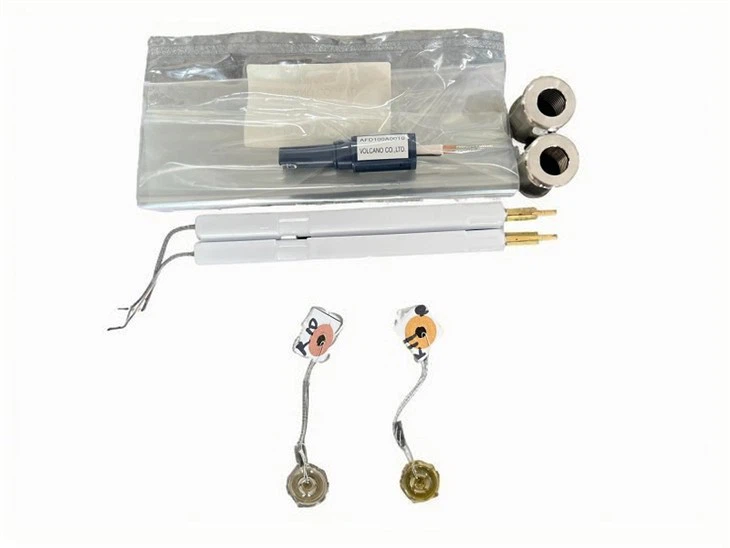
Chemical treatment is an important part of overall water treatment for aux boilers. A variety of chemicals are used to control scale, corrosion, and microbiological growth in the boiler water. For example, scale inhibitors are added to prevent the formation of scale. These chemicals work by interfering with the crystallization process of the minerals in the water, keeping them in solution. Corrosion inhibitors are also used to protect the metal surfaces of the boiler from corrosion. They form a protective film on the metal, preventing the corrosive agents from coming into contact with the metal. Biocides are added to control the growth of bacteria and other microorganisms in the water. Microorganisms can cause slime formation, which can block pipes and reduce the efficiency of the boiler. The Burner Ignition Electrode can work better in a boiler system where the water is properly treated with these chemicals, as it ensures a stable and efficient combustion environment.
5. Monitoring and Control
Water treatment is not a one - time process. It requires continuous monitoring and control to ensure that the water quality remains within the acceptable limits. There are various parameters that need to be monitored, such as pH, alkalinity, hardness, dissolved oxygen, and conductivity. These parameters can be measured using different types of sensors and meters. Based on the readings, the water treatment system can be adjusted accordingly. For example, if the pH of the water is too low, an alkaline chemical can be added to raise it. If the hardness is too high, the water softening system can be adjusted. The Marine Boiler Water Level Gauge is also related to water treatment as proper water levels ensure that the treatment chemicals are distributed evenly in the boiler and that the water - related processes work as intended.
In conclusion, proper water treatment is crucial for the efficient and reliable operation of an aux boiler. By following the water treatment requirements I've discussed above, you can extend the lifespan of your boiler, reduce energy consumption, and prevent costly breakdowns. If you're in the market for an aux boiler or need advice on water treatment for your existing boiler, don't hesitate to reach out. We're here to help you make the best choices for your boiler system.
References:
- Boiler Operation and Maintenance Manuals
- Industry Standards on Boiler Water Treatment