

In the intricate world of marine engineering, marine pumps play a pivotal role in ensuring the smooth operation of various systems on ships and offshore platforms. These pumps are responsible for tasks such as bilge pumping, ballast control, fuel transfer, and cooling water circulation. Among the many components that make up a marine pump, bearings are often overlooked but are absolutely crucial for the pump's proper functioning. As a marine pump supplier, I have witnessed firsthand the significance of bearings in the performance and longevity of marine pumps. In this blog post, I will delve into the functions of bearings in a marine pump and why they are essential for the overall operation of these vital pieces of equipment.
Support and Alignment
One of the primary functions of bearings in a marine pump is to provide support and alignment for the rotating shaft. The shaft of a marine pump is subject to significant forces and loads during operation, including radial and axial forces. Bearings help to distribute these forces evenly and prevent the shaft from bending or misaligning. By maintaining proper alignment, bearings ensure that the pump operates efficiently and reduces the risk of premature wear and failure of other components.
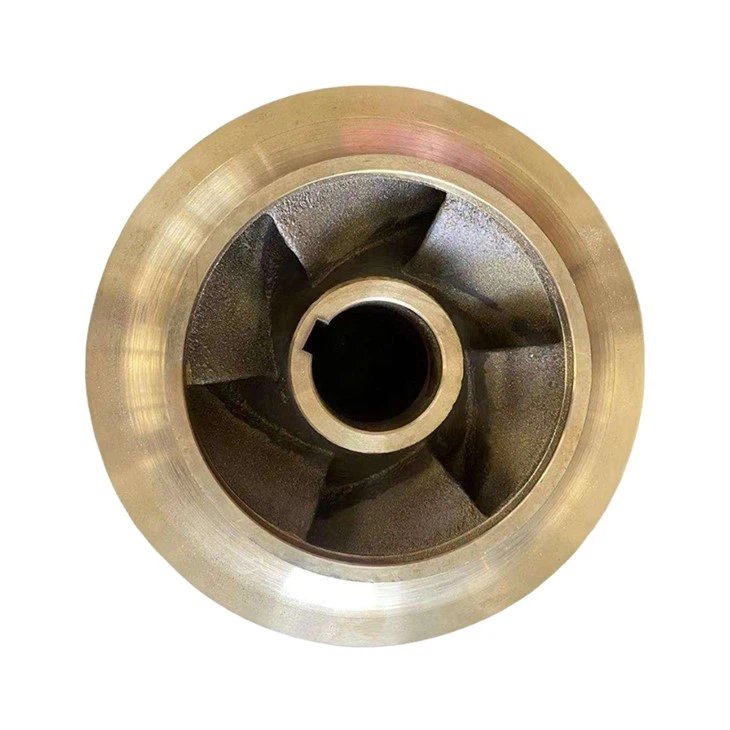
For example, in a centrifugal marine pump, the impeller is mounted on the shaft and rotates at high speeds to create the necessary pressure to move the fluid. Without proper support from the bearings, the shaft could deflect under the weight of the impeller and the forces generated during rotation, leading to increased vibration and noise. This can not only affect the performance of the pump but also cause damage to the Marine Pump Impeller and other internal components.
Reducing Friction
Another critical function of bearings in a marine pump is to reduce friction between the rotating shaft and the stationary parts of the pump. Friction can cause heat generation, which can lead to increased wear and tear on the components and reduce the efficiency of the pump. Bearings are designed with low-friction materials and lubrication systems to minimize the amount of friction between the moving parts.
There are two main types of bearings commonly used in marine pumps: rolling element bearings and plain bearings. Rolling element bearings, such as ball bearings and roller bearings, use rolling elements to reduce friction between the inner and outer races. These bearings are known for their high load-carrying capacity and low friction coefficient, making them suitable for high-speed applications. Plain bearings, on the other hand, use a sliding surface to support the shaft and rely on a lubricant film to reduce friction. Plain bearings are often used in applications where low noise and vibration are required.
By reducing friction, bearings help to improve the efficiency of the marine pump, which can result in lower energy consumption and operating costs. Additionally, reduced friction means less wear on the components, which can extend the service life of the pump and reduce the need for frequent maintenance and replacement.
Absorbing Shock and Vibration
Marine pumps are often subjected to shock and vibration during operation, which can be caused by factors such as fluid flow fluctuations, cavitation, and the movement of the ship. Bearings play a crucial role in absorbing these shock and vibration loads and protecting the pump from damage.
Rolling element bearings are particularly effective at absorbing shock and vibration due to their design. The rolling elements act as a buffer between the inner and outer races, allowing them to absorb and distribute the shock loads evenly. This helps to prevent damage to the bearings and other components of the pump.
In addition to shock absorption, bearings also help to dampen vibration in the pump. Excessive vibration can not only cause noise and discomfort but also lead to premature wear and failure of the components. By reducing vibration, bearings help to improve the reliability and performance of the marine pump.
Sealing and Containment
Bearings in a marine pump also play a role in sealing and containing the fluid within the pump. In many marine pump applications, it is essential to prevent the fluid from leaking out of the pump and into the surrounding environment. Bearings are often designed with seals or shields to prevent the ingress of contaminants and the leakage of fluid.
For example, in a Marine Pump Mechanical Seal application, the bearings are used to support the rotating shaft and maintain the alignment of the seal faces. The seals help to prevent the fluid from leaking out of the pump and also protect the bearings from contamination by the fluid.
Proper sealing and containment are crucial for the safe and efficient operation of a marine pump. Leakage of fluid can not only cause environmental pollution but also lead to a loss of pump performance and increased maintenance costs.
Selecting the Right Bearings for a Marine Pump
As a marine pump supplier, I understand the importance of selecting the right bearings for a specific application. There are several factors to consider when choosing bearings for a marine pump, including the type of pump, the operating conditions, the load requirements, and the speed of rotation.
The type of pump will determine the type of bearings that are most suitable. For example, centrifugal pumps typically require high-speed bearings with low friction and high load-carrying capacity, while positive displacement pumps may require bearings that can withstand high radial and axial loads.
The operating conditions, such as temperature, pressure, and the presence of contaminants, also play a crucial role in bearing selection. In marine applications, the bearings may be exposed to saltwater, which can cause corrosion and damage to the bearings. Therefore, it is important to choose bearings that are made from corrosion-resistant materials and have appropriate seals or coatings to protect them from the environment.
The load requirements of the pump will determine the size and type of bearings that are needed. Bearings must be able to withstand the radial and axial loads generated by the pump without excessive wear or deformation.
Finally, the speed of rotation of the pump will also affect the bearing selection. High-speed pumps require bearings with low friction and high precision to ensure smooth operation and prevent premature failure.
Conclusion
In conclusion, bearings are an essential component of a marine pump, performing several critical functions that are vital for the pump's proper operation. From providing support and alignment to reducing friction, absorbing shock and vibration, and sealing and containing the fluid, bearings play a crucial role in the performance, reliability, and longevity of marine pumps.
As a marine pump supplier, I am committed to providing high-quality bearings and other components that meet the demanding requirements of the marine industry. By understanding the functions of bearings in a marine pump and selecting the right bearings for a specific application, we can ensure that our customers' pumps operate efficiently and reliably for many years to come.

If you are in the market for marine pumps or need assistance with bearing selection for your marine pump application, please do not hesitate to contact us. We have a team of experienced engineers and technicians who can provide you with expert advice and support to help you find the right solution for your needs.
References
- Harris, T. A., & Kotzalas, M. N. (2007). Rolling Bearing Analysis. John Wiley & Sons.
- Shigley, J. E., & Mischke, C. R. (2003). Mechanical Engineering Design. McGraw-Hill.
- ANSI/HI 1.1-1.2-2016, Rotodynamic Pumps - Design and Application. Hydraulic Institute.