

Hey there! As a supplier of Marine Pump Impellers, I often get asked about the power consumption of these little but crucial components. So, I thought I'd write this blog to share some insights and clear up any confusion.
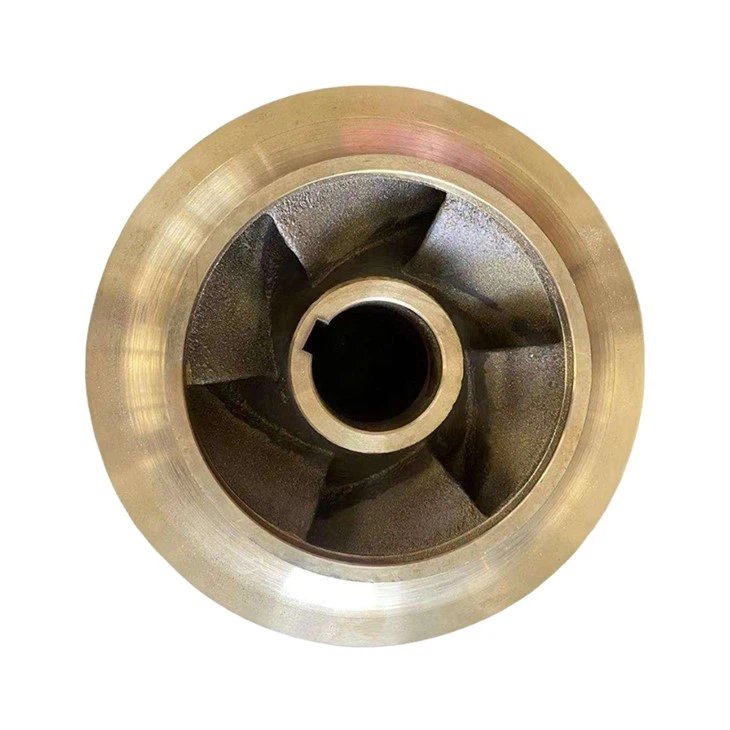
First off, let's understand what a marine pump impeller is. It's a key part of a marine pump, which is used in various marine applications like cooling systems, ballast systems, and bilge pumping. The impeller is like the heart of the pump. It rotates and creates a centrifugal force that moves the fluid through the pump.
Now, the power consumption of a marine pump impeller isn't a one - size - fits - all kind of thing. There are several factors that come into play.
Factors Affecting Power Consumption
1. Design and Geometry
The shape and size of the impeller have a huge impact on power consumption. An impeller with a more streamlined design will generally use less power. For example, if the impeller blades are well - curved and have the right angle, they can move the fluid more efficiently. This means less energy is wasted in pushing the fluid around. On the other hand, a poorly designed impeller with sharp edges or incorrect blade angles might cause turbulence, which in turn increases the power needed to operate the pump.
2. Flow Rate
The amount of fluid that the pump needs to move, known as the flow rate, is another major factor. If you need a high flow rate, the impeller has to work harder. Think of it like trying to push a lot of water through a small pipe. The more water you want to push, the more force you need. So, a pump with a high - flow requirement will have an impeller that consumes more power.
3. Head Pressure
Head pressure refers to the resistance that the pump has to overcome to move the fluid. It includes factors like the height the fluid needs to be lifted, the friction in the pipes, and any valves or fittings in the system. Higher head pressure means the impeller has to generate more force to push the fluid through. This requires more power. For instance, if you're pumping water from a lower deck to a higher deck on a ship, the impeller will need more power compared to a situation where the water is being pumped horizontally.

4. Fluid Properties
The type of fluid being pumped also matters. Viscous fluids, like some oils or thick slurries, are harder to move than water. The impeller has to work against the internal friction of the fluid, which increases power consumption. Additionally, the density of the fluid plays a role. Heavier fluids require more energy to move.
Calculating Power Consumption
Calculating the power consumption of a marine pump impeller can be a bit tricky. There are some formulas and equations that engineers use, but they usually involve a lot of technical details. However, I can give you a general idea.
The power (P) required by a pump can be estimated using the following formula:
[P=\frac{Q\times H\times\rho\times g}{\eta}]
Where:
- (Q) is the flow rate (in cubic meters per second)
- (H) is the head pressure (in meters)
- (\rho) is the density of the fluid (in kilograms per cubic meter)
- (g) is the acceleration due to gravity (approximately (9.81 m/s^{2}))
- (\eta) is the efficiency of the pump
The efficiency of the pump takes into account losses due to factors like mechanical friction, leakage, and hydraulic losses. The impeller is a major contributor to the pump's efficiency. A well - designed impeller can improve the overall efficiency of the pump, reducing power consumption.
Importance of Low Power Consumption
Low power consumption is crucial in the marine industry for several reasons. First of all, it saves on fuel costs. Ships and other marine vessels operate on a tight budget, and reducing power consumption can lead to significant savings over time. Secondly, it's better for the environment. Lower power consumption means less fuel burned, which reduces emissions.
As a Marine Pump Impeller supplier, we focus on designing impellers that are energy - efficient. We use advanced manufacturing techniques and materials to optimize the performance of our impellers. Our impellers are designed to have a high efficiency, which means they can move more fluid with less power.
Related Components and Their Impact
The power consumption of the impeller doesn't work in isolation. Other components of the marine pump also play a role.
Marine Pump Mechanical Seal
The mechanical seal is used to prevent leakage of the fluid from the pump. A worn - out or poorly designed mechanical seal can cause leakage, which in turn can reduce the efficiency of the pump. If there's leakage, the impeller has to work harder to maintain the desired flow rate, increasing power consumption.
Marine Pump Shaft
The shaft connects the impeller to the motor. A misaligned or damaged shaft can cause vibration and increased friction. This not only affects the lifespan of the components but also increases the power needed to operate the pump. A smooth - running shaft ensures that the impeller can rotate efficiently, reducing power consumption.
Choosing the Right Impeller
When it comes to choosing a marine pump impeller, it's important to consider your specific requirements. You need to know the flow rate, head pressure, and the type of fluid you'll be pumping. Working with an experienced supplier like us can help you make the right choice. We can provide you with detailed technical advice and recommend the best impeller for your application.
If you're in the market for a marine pump impeller and want to learn more about power consumption or our products, don't hesitate to get in touch. We're here to help you find the most energy - efficient solution for your marine pumping needs. Whether you're looking to upgrade an existing system or install a new one, we've got the expertise and the products to meet your requirements. Contact us today to start the conversation about your marine pump impeller needs and how we can help you save on power consumption.
References
- "Pump Handbook" by Igor J. Karassik et al.
- "Centrifugal Pumps: Design and Application" by Heinz P. Bloch and Allan R. Budris.